
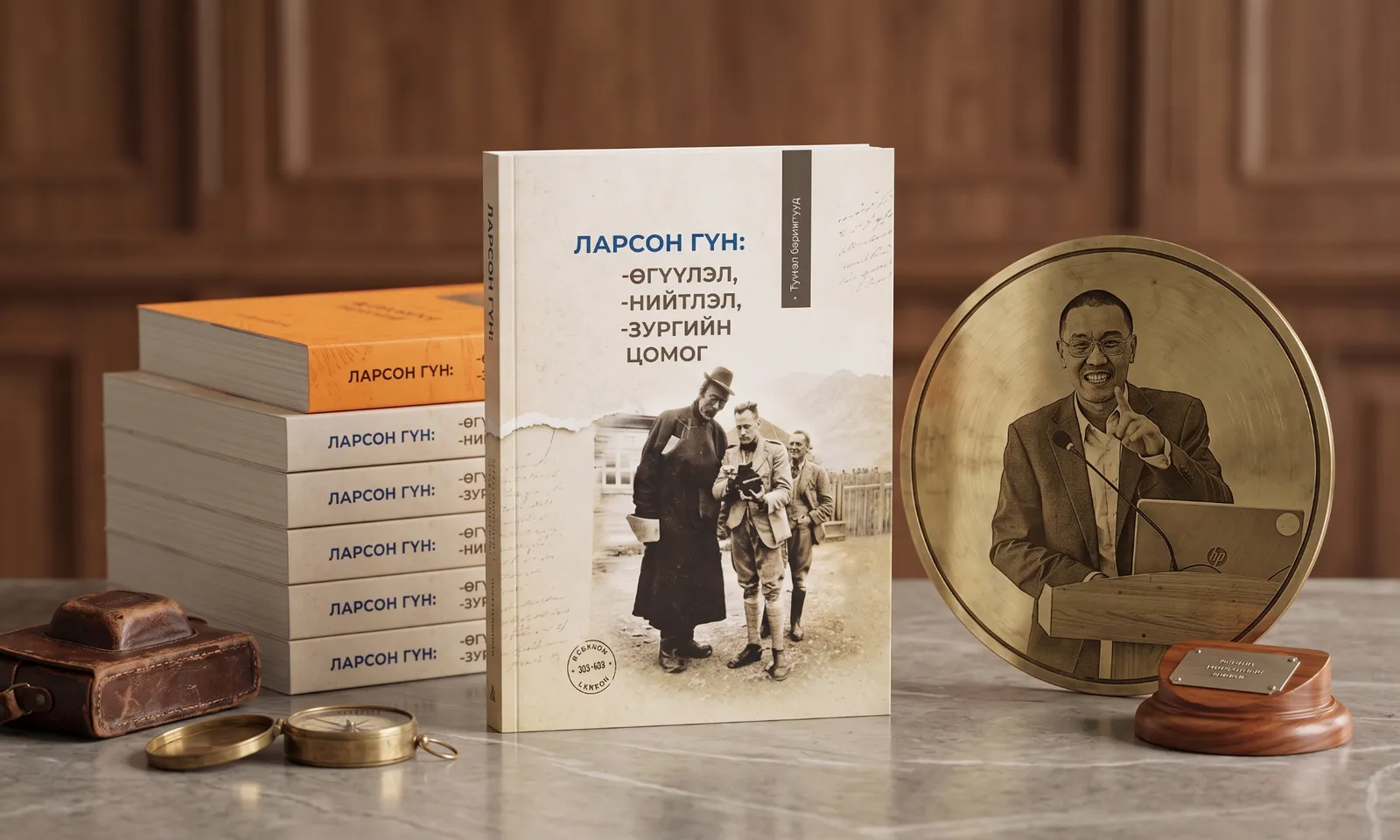
Dr. Saruul-Erdene Myagmar, Mongolian collections specialist at the Library of Congress, unveiled his new book "Larson Gun" (Duke Larson) on May 11 in Ulaanbaatar. The publication draws from articles, essays, and photographic archives based on Mongolia-related materials preserved at the U.S. Library of Congress.
The book showcases rare photographs, historical notes, and documents collected by Swedish missionary Frans August Larson, who first arrived in Mongolia in 1893 to preach Christianity. Among the striking images is one captioned "Even Mongolian beggars ride horses," which caught foreign attention because horse ownership in Sweden and the United States at that time was typically limited to landowners and the middle class. The fact that even poor Mongolians often owned horses was remarkable to outsiders.
The collection also includes photographs connected to Diluv Khutughtu and the celebrated wrestler "Undur Gongor," who was known for his exceptional height.
A Complex Historical Figure
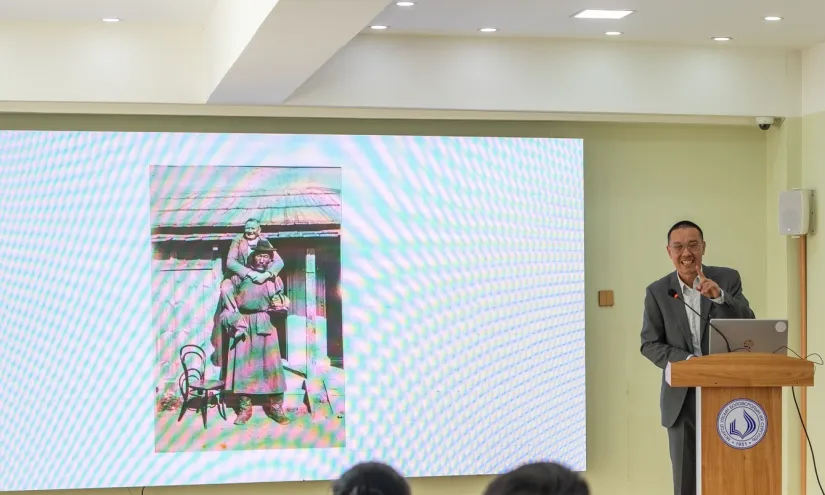
At the book launch, Dr. Saruul-Erdene described Larson as a fascinating figure with a unique history of working across multiple fields simultaneously. "It is difficult to judge him simply 'good' or 'bad,'" he said. Larson first came as a missionary and learned Mongolian fluently. When he began selling Bibles in Mongolia, they were exchanged for items such as dried dung fuel (argal), cheese, and needles.
Saruul-Erdene shared an amusing anecdote: Mongolians bought large quantities of Bibles, leading Larson to believe his sales were successful. He later discovered that many people were using the leather covers as shoe insoles.
Insights into Traditional Mongolian Education
The book cites Larson's observations on Mongolia's traditional home-schooling system around 1909. Literate individuals would set up gers and teach neighborhood children, with families paying tuition in livestock. One sheep covered half a year of study, while one cow paid for a full year.
Preserved Materials and Scholarly Approach
According to Saruul-Erdene, Larson maintained close relations with Mongolians throughout his time there. The photographs, journals, and historical materials he collected during his years in Mongolia are now preserved at the Library of Congress. The new publication presents these materials without interpretation, leaving historians and researchers to study them from their own perspectives.
Recognition and Legacy
Larson was granted the noble title of "Duke" by Mongolia's Bogd Khaan in 1920 in recognition of his service as an interpreter in communications between Mongolia and the United States, including during the visit of the first U.S. diplomatic representatives to Mongolia. Known among Mongolians as "Duke Larson," the missionary, trader, and Mongolist scholar lived and worked in Mongolia and China from 1893 to 1939.
He authored several books on Mongolia. His first major work, "Larson, Duke of Mongolia," was published in Sweden in 1939 under the title "My Life Among Mongolia and the Mongols." The book became widely popular, was translated into several languages, and was reportedly used as a textbook in Turkish schools.
Source: MONTSAME, May 12, 2026

Written byNewsDesk
We cover the world of books and publishing. Every day, we hunt for the best news on book launches and industry trends. We read through press releases and trade sources so authors and book lovers don't have to. We find the stories that matter most.
Continue Reading
More articles from World History and beyond